What Happens Between Templating and Installation Day

Most people judge a countertop job by the day the slab arrives and never think about the measuring that decides whether it fits. The order of work in Pensacola, FL runs the same way on nearly every kitchen, and the breakdown sitting on countertops pensacola idvl lists the steps in the sequence the shop follows them, from the first measurement to the first wet day.
Templating comes before any stone is touched
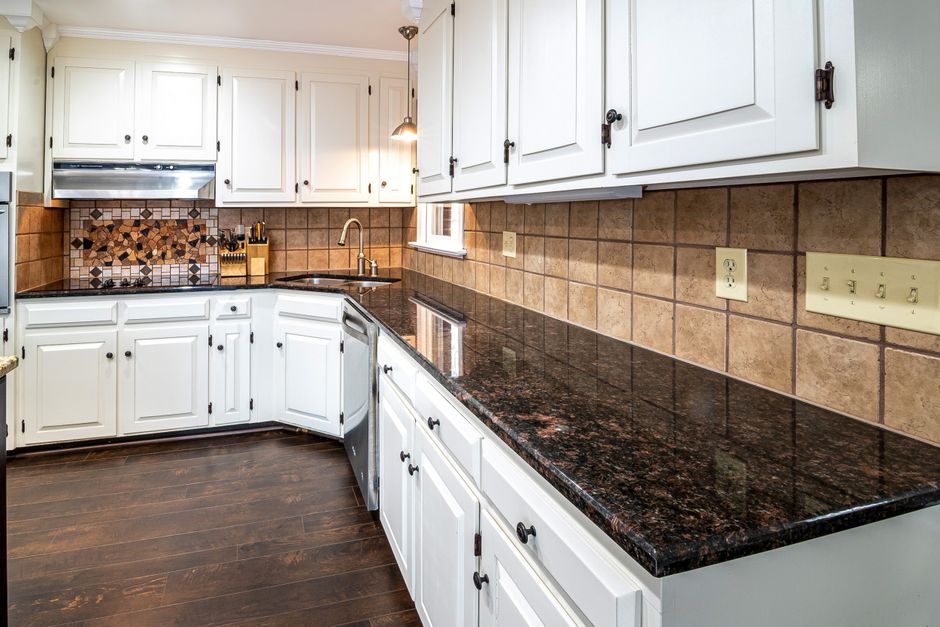
Templating starts with a laser or digital measuring tool, or with thin strips glued into a physical pattern of the exact cabinet layout. Walls in older Escambia County houses are rarely square, and the template records every bow and corner. Overhang, sink cutout and cooktop position get marked on it at the same visit.
Layout on the slab and seam placement

The template is laid over the actual slab, digitally or physically, before any cutting. This is where seam placement gets settled and where the veining is matched across pieces. A granite or marble slab with a strong vein needs this step most. Seams are kept away from the sink corners and cooktop where the stone is weakest. Seams cannot be eliminated on every kitchen, since a long run or an L shape often exceeds the length of one slab.
Cutting and edge work
Stone and quartz are cut with water cooled saws, often a bridge saw or a CNC machine, so dust and heat stay under control. Nothing is cut freehand on site from a guess. After cutting, the edge profile is shaped, whether an eased edge, a bevel or an ogee, then polished through progressively finer grits until the face is uniform. A bullnose takes more passes than an eased edge, and a waterfall edge needs mitered pieces cut to match the vein running down the side.
Seams, sinks and faucet holes
Seams are joined with color tinted epoxy or polyester adhesive. Seam setters with vacuum cups pull the two pieces flush so the joint sits level to the touch. An undermount sink is held with clips or brackets plus silicone. Faucet holes are drilled to match the chosen faucet, so the faucet should be picked before fabrication, not after.
Curing before heavy use
Silicone and seam adhesive need time to cure. Silicone is commonly given about a day before water exposure, and the seam should not carry heavy loads, such as a stack of cookware or a person leaning on it, until the adhesive has set. A top is not ready for full use the minute the installers leave. Quartz, granite and quartzite all follow the same rule, and a coastal home near Pensacola Beach, where humidity slows some adhesives, is better off waiting a little longer.