Hot Pans on a Stone or Quartz Countertop in Pensacola
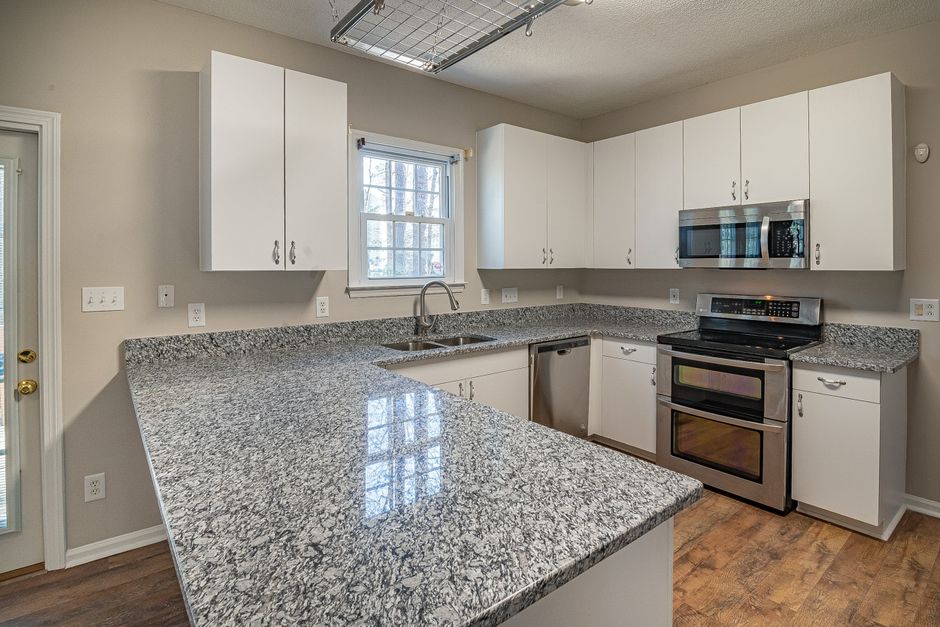
No, you should not set a hot pan directly on a quartz countertop, and it is a gamble on most other surfaces too. Quartz is crushed stone held together by polymer resin, and the resin is what burns. Granite handles heat better, but a sudden temperature difference can still crack it. A trivet costs almost nothing compared with a damaged slab.
Why Quartz Is the Most Vulnerable
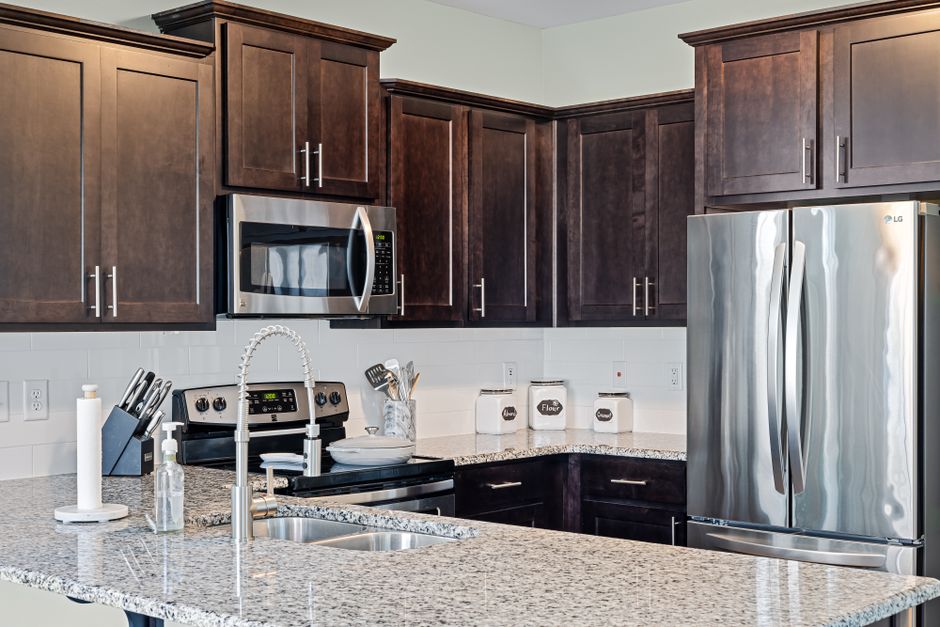
Engineered stone is mostly ground natural quartz bound with resin. The mineral particles handle heat well. The resin does not. A skillet straight off the burner or a dish out of the oven can soften or scorch the binder and leave a mark that stays.
The mark usually appears as a whitish, yellowish or cloudy ring or patch in the shape of the pan bottom. Dark and solid colored quartz show it most. Because the resin itself has changed, the mark typically cannot be polished out, and home buffing will not fix it.
It is tempting to reason that quartz mineral melts at extreme temperatures, so the countertop must be heatproof. That logic fails because the binder, not the mineral, sets the limit.
Thermal Shock: The Crack Risk
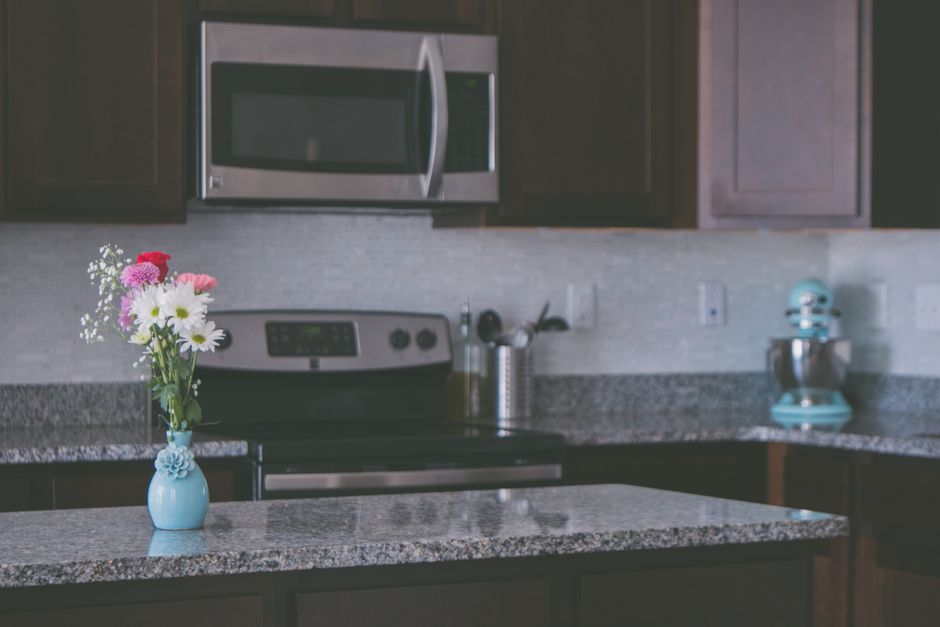
Scorching and cracking are separate problems. Thermal shock happens when a hot object heats one small area quickly while the rest of the slab stays cool. The hot spot tries to expand, the cool stone around it does not, and the stress can open a crack. This can happen in quartz and in natural stone.
Cracks tend to start at weak points:
- The inside corners of sink and cooktop cutouts
- The narrow strip of stone in front of or behind a cutout
- Seams between slabs
- Unsupported overhangs
Even if you take chances elsewhere on the counter, avoid putting hot cookware on those spots. A thicker slab is not immune either.
The reverse also applies. Do not put a pan of ice or frozen food where a hot pot just sat, and do not pour boiling water across a cold slab. The same expansion stress is at work.
How Each Material Handles a Hot Pan
Granite
Granite tolerates direct heat far better than quartz because it has no resin to burn. That does not make it crack proof. A slab with natural fissures, resin filled pits, or a thin strip near a cutout can still crack from a sharp temperature change. Heat can also cloud or discolor a topical sealer or resin fill.
Granite is sometimes finished with a torch in a process called stone flaming, which shows the mineral can take intense surface heat. That is done on whole slabs under controlled conditions. A polished kitchen slab with cutouts and seams will not necessarily shrug off a hot pan every time.
Quartzite
True quartzite is a hard natural stone that handles heat well. The catch is the name. Some stones sold as quartzite behave more like marble or dolomite, which are softer and react differently to heat, scratches and acids. Confirm with your fabricator that the slab is real quartzite before trusting it near the stove.
Marble
Marble handles moderate heat but is soft and porous. Heat can dull the finish or affect the sealer, and acidic food spilled from a hot pan will etch it. Treat marble as a trivet only surface.
Solid Surface
Solid surface, the acrylic or polyester based material sold under names like Corian and Avonite, can scorch, blister or crack from direct pan heat. Its advantage is that the color runs all the way through, so light scorch marks can often be sanded and refinished by a fabricator. Not every scorch means the top must be replaced.
Porcelain and Sintered Stone
These slabs resist surface heat very well. Many are thin, though, and thermal shock or a dropped pot can still crack them, especially at edges and cutouts. Check the maker's care guidance before treating them as heatproof.
Butcher Block
Wood chars. A hot pan leaves dark rings, and shallow burns can usually be sanded out and the surface re-oiled. Deep burns leave a visible dip after sanding.
What Counts as a Hot Pan
The pans that cause the most trouble are not always the ones that look dangerous.
- Cast iron, enameled cast iron and stone baking slabs hold heat for a long time. They can scorch quartz or shock stone even several minutes after coming off the heat. Give them the thickest trivet you own.
- Slow cookers, electric griddles, multicookers and toaster ovens run for hours and push sustained heat into one spot. Set them on a cutting board or heat resistant mat, especially on quartz and solid surface.
- Air fryers and countertop ovens can blow hot exhaust out the back or sides. Point the vent away from the backsplash and seams, and leave the clearance the manual calls for.
Choosing a Trivet That Works
Use a trivet that holds the pan off the surface with feet or an air gap. Cork, wood, silicone and footed metal all work. A thin dish towel slows heat transfer, but it is not a reliable barrier for cookware straight from a hot oven, so do not treat it as equal to a proper trivet.
Keep a couple of trivets within arm's reach of the stove and oven. The habit sticks when the trivet is already where your hands are.
One more small habit protects the finish: lift cookware instead of dragging it. Pan bottoms carry grit and burnt residue that can scratch or dull a polished surface, so wipe the counter before setting anything down.
Check the Area Around Your Cooktop
A cooktop set into a countertop relies on the clearances and any heat shielding called for in its installation instructions. If those were skipped, the stone around the cutout can run hot every time you cook. Ask about it before installation, or look into it if you notice discoloration around the cooktop edge.
Pensacola Situations That Change the Rules
Outdoor kitchens and lanais
Quartz resin yellows and degrades under sustained sun, and most quartz makers do not intend it for outdoor use. For lanais, screened porches and pool decks, natural granite or a rated outdoor material is the usual choice.
Dark stone in direct Gulf Coast summer sun can get uncomfortably hot to touch before any grill heat is added. Plan outdoor counters with shade in mind, and keep hot grill grates and pans on a rack or trivet rather than on sun soaked stone.
Salt air near the water
Homes near Pensacola Beach, Perdido Key and the bayfronts get salt air on outdoor stone. Rinse and wipe outdoor counters regularly, and keep natural stone sealed according to the fabricator's guidance. Salt residue in porous stone works against both the finish and the sealer. Keep in mind that sealing addresses staining. It does not make stone heat resistant, and heat can discolor the sealer itself.
Cooking during a power outage
After a hurricane, many households cook on butane or propane burners. Never set a portable burner directly on quartz or solid surface. Put it on a thick cutting board or a metal sheet pan over a trivet. Use only burners rated for indoor use, with ventilation, and never run a generator or charcoal grill indoors or in a garage.
If You Already See a Mark or Crack
Stop using that area for heat and photograph the damage. Then call a fabricator rather than a general handyman. Cracks can sometimes be filled with color matched resin. Scorched quartz often means replacing a section, and matching a newer slab to an older one is difficult.
Also read your warranty before you need it. Heat damage and thermal shock are commonly excluded by quartz and solid surface makers, so following the trivet rule is usually what keeps the coverage meaningful.
The Simple Rule
Treat every countertop as a trivet only surface, whatever the brochure said. Granite and sintered stone give you more margin, solid surface and butcher block can often be repaired, and quartz is the least forgiving. A few seconds to set a pan on a trivet is far cheaper than a ring that never comes out or a crack beside the cooktop.